

ViennaUP Report: Final Thoughts
May 21, 2026|NH
Today's stories
After a week of reporting from events across ViennaUP, our reporting team shares their final thoughts - about startups, technology and the future of health.
- Don’t gender your robots // By Marlene Sophie Weissböck
- Maybe I need a startup idea // By Dennis Miskić
- HealthTech at ViennaUP 2026 – Moving closer to the patient// By Sophia Tiganas
Don’t gender your robots
By Marlene Sofie Weissböck
After a week of founder talks, AI debates, investor panels and approximately 47 oat milk coffees, one idea kept following me: technology is never just about tools. Whether discussions focused on sustainability, entrepreneurship, or artificial intelligence, the real question was often about the structures and assumptions behind innovation itself.
One conversation that stayed with me came after the Recursive CEE Forum, where I met robotics researcher Emily Genatowski. During ViennaUP, the city is filled with people building ideas for the future. Amid the crowds moved Genatowski, accompanied by her humanoid robot. Calmly guiding it through Vienna’s busy streets with practiced precision. Clearly not for the first time.
For more than a year, the New York native shared her Vienna apartment with the robot as part of an ongoing research project. “I made my home my laboratory,” she told me. “I made myself the guinea pig, the lab rat, if you will.” Like many founders and researchers whom I encountered throughout the festival, her work is grounded less in abstract theory and more in real-world experimentation. What struck me most, however, was not the technology itself but her deliberate choice of language. Genatowski insists on referring to the robot as “it,” never “she” or “he.”
In her view, society has long gendered domestic technologies in ways that reflect broader assumptions about care and household labor. She pointed to early AI assistants such as Siri or Alexa, which were often designed with female voices while performing domestic or supportive tasks. “As AI expanded into large language models, it became very important that we not gender it,” she explained, particularly as robots increasingly enter private homes.
Whether in climate innovation, investing, or female entrepreneurship: Across ViennaUP, I repeatedly heard discussions about systems, structures, and responsibility. Genatowski’s perspective connected strongly to that broader atmosphere. Her concern is not symbolic but structural: if domestic AI becomes widespread, existing assumptions about household labour could quietly carry over into technological design.
At its core, her research asks a larger question that echoed throughout many conversations this week at ViennaUP: when we build the future, which old patterns are we unconsciously bringing with us? This question surfaced in conversations about sustainability, female entrepreneurship and structural barriers in innovation. And as Genatowski’s work shows, even a small linguistic choice – calling a robot “it” – can carry meaning.
Maybe I need a startup idea
By Dennis Miskić
Having a background in political science, ViennaUP reporter Dennis Miskić had some issues deciphering the keywords of the tech and startup bubble. But once he got used to the big buzzwords, he enjoyed the refreshing conversations.
"So, what's your startup?" is a question I'd never thought so many people would ask me in just one week. But during ViennaUP, they did — relentlessly, enthusiastically, and with the kind of hopeful energy of people who genuinely believe they're about to change the world. Which, to be fair, some of them might.
At first, I'd startle and fumble through an explanation that no, I'm actually here as a journalist. What followed, almost every single time, were inspiring and uplifting conversations with founders, investors, and entrepreneurs during coffee breaks, in between panels, at networking drinks, or around the home base.
It was a genuine pleasure to meet people from all corners of the world carrying fresh perspectives on old problems. The StartupLive'26 was the perfect entry point for me personally. Listening to pitch after pitch, you quickly develop a feel for what lands and what doesn't, even though some were too technical for me to even begin to understand after a long day.
And then there was the CEE Forum. Coming from the Balkans myself, this was obviously a highlight. Talking to tech entrepreneurs in my mother tongue, experiencing that unique Balkan humour in combination with grand ambitions was inspiring. It also challenged the notion the countries of the region were backward or lazy towards innovation.
I'll admit, coming from political science and a career spent reporting on that topic, the startup bubble has its own language that took some getting used to. Scaling, product-market fit, etc... But beneath the buzzwords, the conversations were honest, the ideas were real, and the optimism was contagious. Who knows, maybe I’ll come back with a different answer for the question on what my startup idea is.
HealthTech at ViennaUP 2026 – Moving closer to the patient
By Sophia Tiganas
Only about half of all stroke survivors receive the physical therapy they need to walk again. In cardiovascular emergencies, women who don't present with male-presented symptoms are routinely overlooked for diagnostics and care. And across virtually every field of medicine, the patient's voice is still treated as optional feedback rather than a founding principle of the system.
To someone like me, who falls within the gaps of the medical system on a regular basis, ViennaUP's focus on HealthTech this year was beyond refreshing. Rather than just showcasing new technologies, this year's programme posited something more fundamental: that the problems already embedded in the system deserve just as much attention as the innovations meant to solve them. As a chronically ill person – who only got diagnosed after several years of proving to countless doctors that I was indeed not just dealing with growth spurts or period-related pain – this year's attentive founders, carefully curated innovations, and solutions born from lived experience rather than boardroom abstraction gave me something I hadn't quite expected: hope. Because running through all of it – the pitches, the panels, the forums – was one clear, common thread: the patient has to come back to the centre.
Waleed Faisal, founder and CEO of ArrayPatch, puts it simply: "Your end user is the people, the patients. And if your innovation, your product, doesn't make sense for them, there is no sense to it at all." ArrayPatch is working to move healthcare beyond injections through DerMap: a microneedle patch made from the drug itself, dissolvable and precise, designed for conditions like skin cancer, diabetes, and migraines – and when I heard that last part, my eyes lit up. The technology allows for quicker, more stabilised drug distribution while also relieving patients of the burden of self-administering injections regularly. But what drives Waleed is less the mechanism than the person on the other end of it.
When I thanked him for taking such a frequently overlooked chronic illness so seriously – migraines being something I experience myself – he said: "I know what this pain means. I know how frustrating and exhausting it can be. Especially since it can take around two hours for pain relief medication to alleviate the struggle even a little bit. And most patients are willing to do almost anything just to reduce that pain – even for one minute." One of his own family members is a migraine patient.
Another ViennaUP moment that stayed with me had nothing to do with cutting-edge technology or breakthroughs in longevity science. It was a product born entirely from lived experience. Evelyne Faye, a breast cancer survivor, took the stage to share her story and what came out of it: the Mamma C. Doll, a simple plush doll designed to help parents going through breast cancer explain the illness, its treatment, and its consequences to their young children. The doll has a tumour in one breast, a chemo port, and a detachable wig, among other details. It may not sound as headline-grabbing as an AI-powered diagnostic tool or a longevity supplement – but it left every person in that room visibly moved, precisely because it approached the healthcare system from the most essential angle: the human one.
These founders were not the only ones putting patients at the centre of the conversation. Johanna Reinedahl, co-founder of AINovo – an AI-powered exoskeleton designed for physical therapy and rehabilitation in cases of stroke and paralysis – and Dr. Wanda Lakner, who spoke about how frequently female patients are overlooked simply because they don't present with male symptoms, also left a lasting impression on my ViennaUP week.
What all of them had in common was something that stood out across the whole HealthTech programme: the most compelling innovations weren't just being built by people who had spotted a market gap. They were being built by people who understood, often from the inside, exactly what was at stake. Because as this week made clear: you can't build the future of healthcare without putting the patient back at the centre of it. Not just as an end user – but as the entire point.
Meet today's ViennaUP reporters
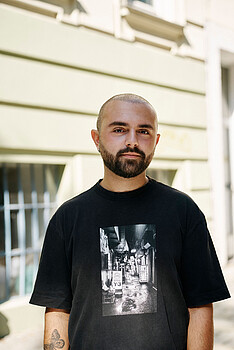
Dennis Miskićis a Vienna-based freelance journalist, mostly covering the Balkans or Eastern Europe. He studied political science in Vienna, Melbourne and Leiden
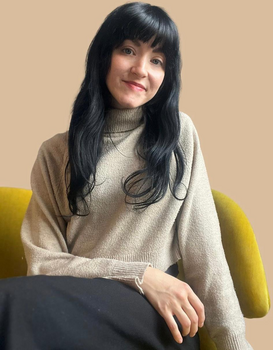
Marlene Sofie Weissböck is a Vienna-based journalist with experience in online reporting, TV, radio, and social media. She has worked for several Austrian media outlets, including PULS 4 and the Austria Presse Agentur, where she reports on political, socio-economic, and economic topics across both broadcast and digital formats.
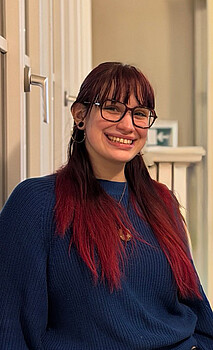
Sophia Tiganas grew up in Romania and moved to Vienna in 2021. Since then, she has worked as a journalist for different Austrian publications and has specialised in Tech, AI, and socio-political topics. She is a fact-checker for the independent media watchblog Kobuk and occasionally covers tech topics for the Austrian newspaper Der Standard.
The opinions expressed in the ViennaUP daily reports are those of the authors and their interview partners and may not reflect those of the ViennaUP team.